What Does Food Variety Mean?

Food variety refers to consuming a wide range of foods from different food groups and within each group. This concept is supported by most national dietary guidelines around the world.

The idea is straightforward: different foods provide different nutrients. By diversifying what you eat, you increase the likelihood of meeting a broader range of nutritional needs through your regular meals.

Variety applies not just to food types but also to preparation methods, colors, textures, and sources. Each of these dimensions adds a different layer to dietary diversity.
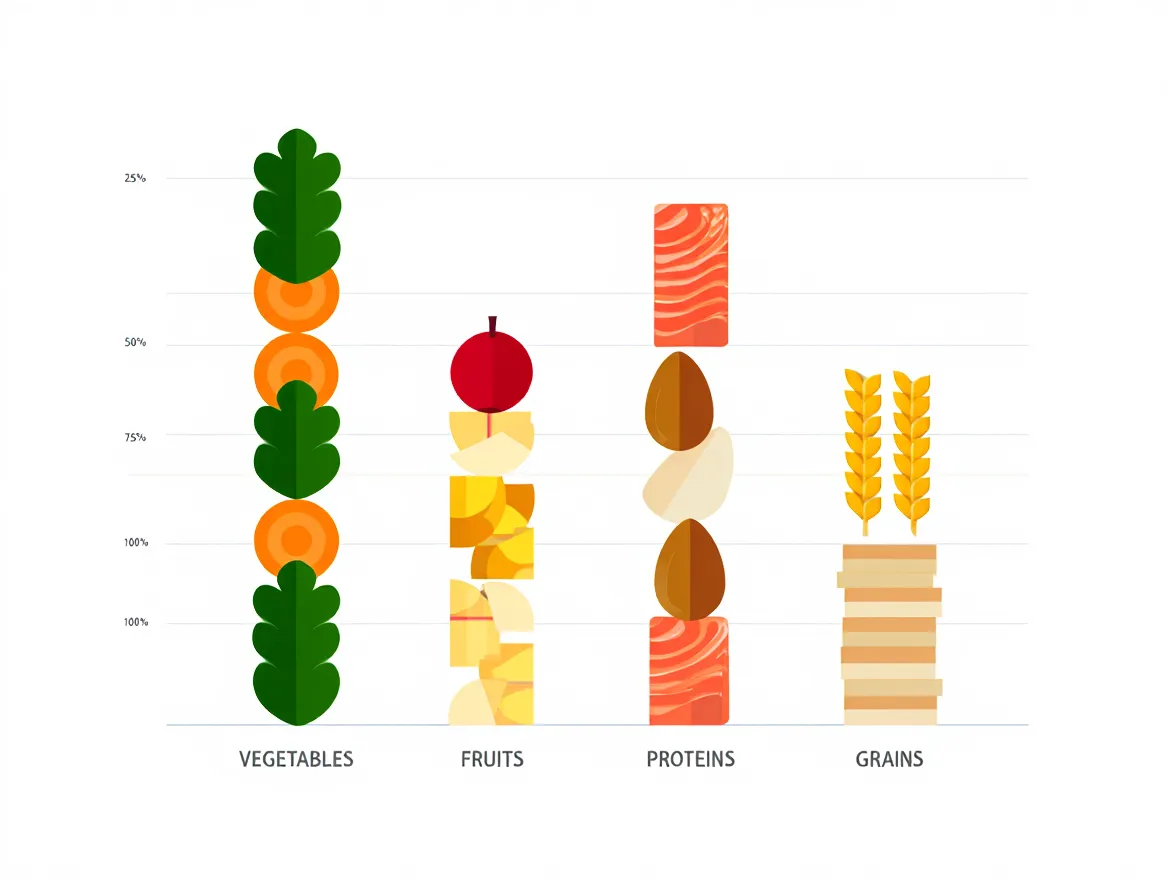
Abstract visualization of four food categories shown as vertical columns with varying heights representing diverse nutritional content

Exploring the Main Food Groups

A general overview of widely recognized food groups and the types of nutrients they are commonly associated with.

Vegetables and Legumes

Vegetables provide a broad range of vitamins, minerals, and dietary fiber. Legumes such as lentils, beans, and chickpeas are notable for their protein and fiber content. Including different vegetables daily supports dietary variety.

Fruits

Fruits vary widely in their nutrient profiles. Berries, citrus fruits, stone fruits, and tropical varieties each bring different vitamins and phytochemicals. Eating a range of fruits across the week is a simple way to diversify.

Grains and Cereals

Whole grains such as oats, brown rice, quinoa, and barley offer different fiber profiles and micronutrients. Rotating grain choices across meals is an often-overlooked aspect of dietary variety.

Protein Sources

Protein can come from animals, plants, or both. Fish, poultry, eggs, tofu, tempeh, nuts, and seeds all have different amino acid and micronutrient compositions. Varying your protein sources across the week broadens intake.

Dairy and Alternatives

Dairy products and fortified alternatives provide calcium and other nutrients. Options include milk, yogurt, cheese, and plant-based alternatives fortified with calcium and vitamins.

Healthy Fats

Fats from sources like olive oil, avocados, nuts, and fatty fish contribute essential fatty acids. Including different fat sources in your diet supports a varied intake of lipid-soluble nutrients.

How to Incorporate More Variety

Straightforward approaches to increasing dietary diversity in everyday meals.

Weekly Meal Mapping

Before shopping, sketch a rough plan of the week's meals. Aim for different main ingredients each day. This doesn't require detailed recipes — even a broad outline promotes variety.

The Two-New-Items Rule

Each week, include at least two items you don't usually buy. This could be a new vegetable, a different grain, or an unfamiliar spice. Small additions compound into significant variety over time.

Batch and Rotate

Prepare base components (grains, roasted vegetables, proteins) in advance, then mix and match them into different meals during the week. Same ingredients, different combinations each day.

Color-Check Your Plate

A quick visual scan of your plate can reveal how varied your meal is. More colors generally indicate a wider range of food types. This is a simple, practical check that requires no specialized knowledge.

Explore Local and Seasonal Produce

Visiting farmers' markets or choosing seasonal sections at stores naturally introduces foods you might not select otherwise. Seasonal eating inherently produces rotation throughout the year.

Barriers to Dietary Variety

Recognizing common habits that may limit variety can be the first step toward broadening your dietary patterns.

Habitual Meals

Many people eat the same few meals on rotation. While familiar meals provide comfort and convenience, they can limit the range of nutrients consumed over time. Introducing small changes to familiar meals can broaden variety without disrupting established routines.

Limited Ingredient Knowledge

Unfamiliarity with how to prepare certain foods can restrict choices. Learning one new preparation technique per month — such as roasting root vegetables or making a simple grain salad — can open up new ingredient options.

Shopping on Autopilot

Buying the same items each week is efficient but may reduce dietary variety. Taking a few minutes to browse different aisles or check seasonal offerings can introduce new options without significantly changing shopping routines.

Over-Reliance on Convenience

Packaged and pre-made meals can be helpful but often feature a narrow range of ingredients. Balancing convenience items with some fresh, whole food components can support greater variety in daily eating.

All content on this site is for general education and information only. It is not medical or dietetic advice, does not diagnose or treat any condition, and is not a substitute for a qualified health professional. Individual results vary; nothing here guarantees specific outcomes. Consult a qualified professional before changing your diet or health routine, especially if you have chronic conditions, are pregnant or nursing, or take medication.